Spirulina under the a 200x microscope:

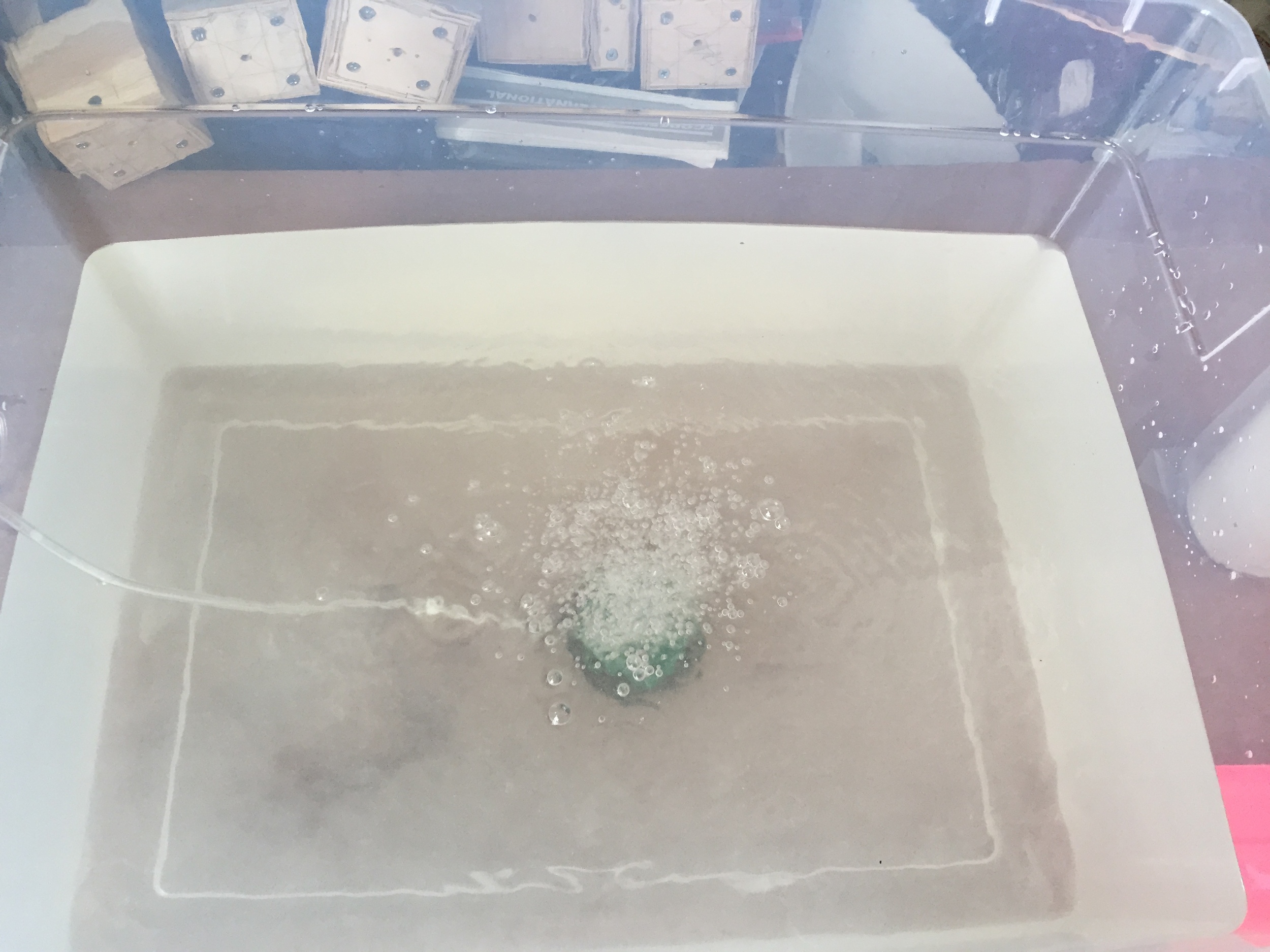
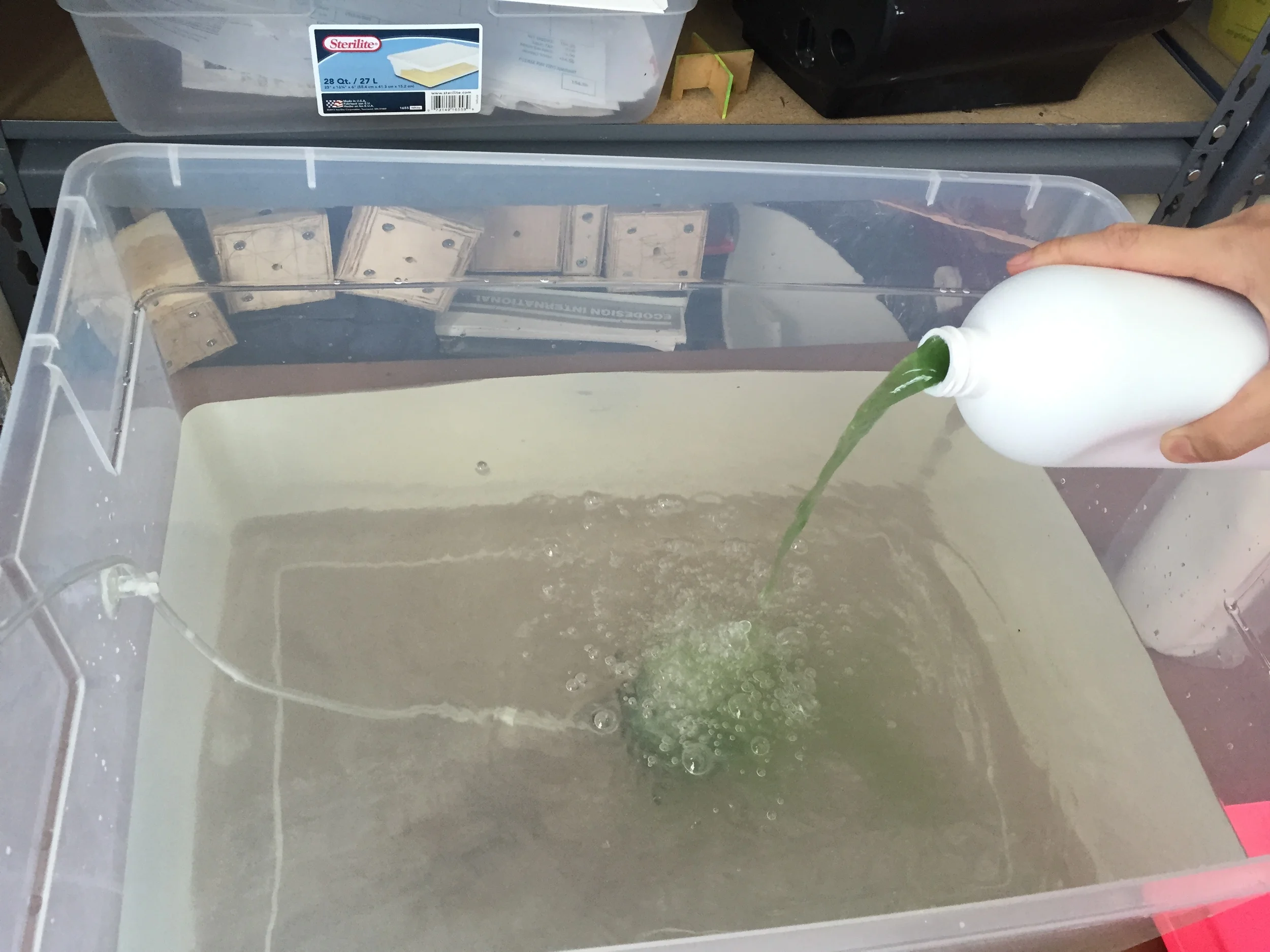
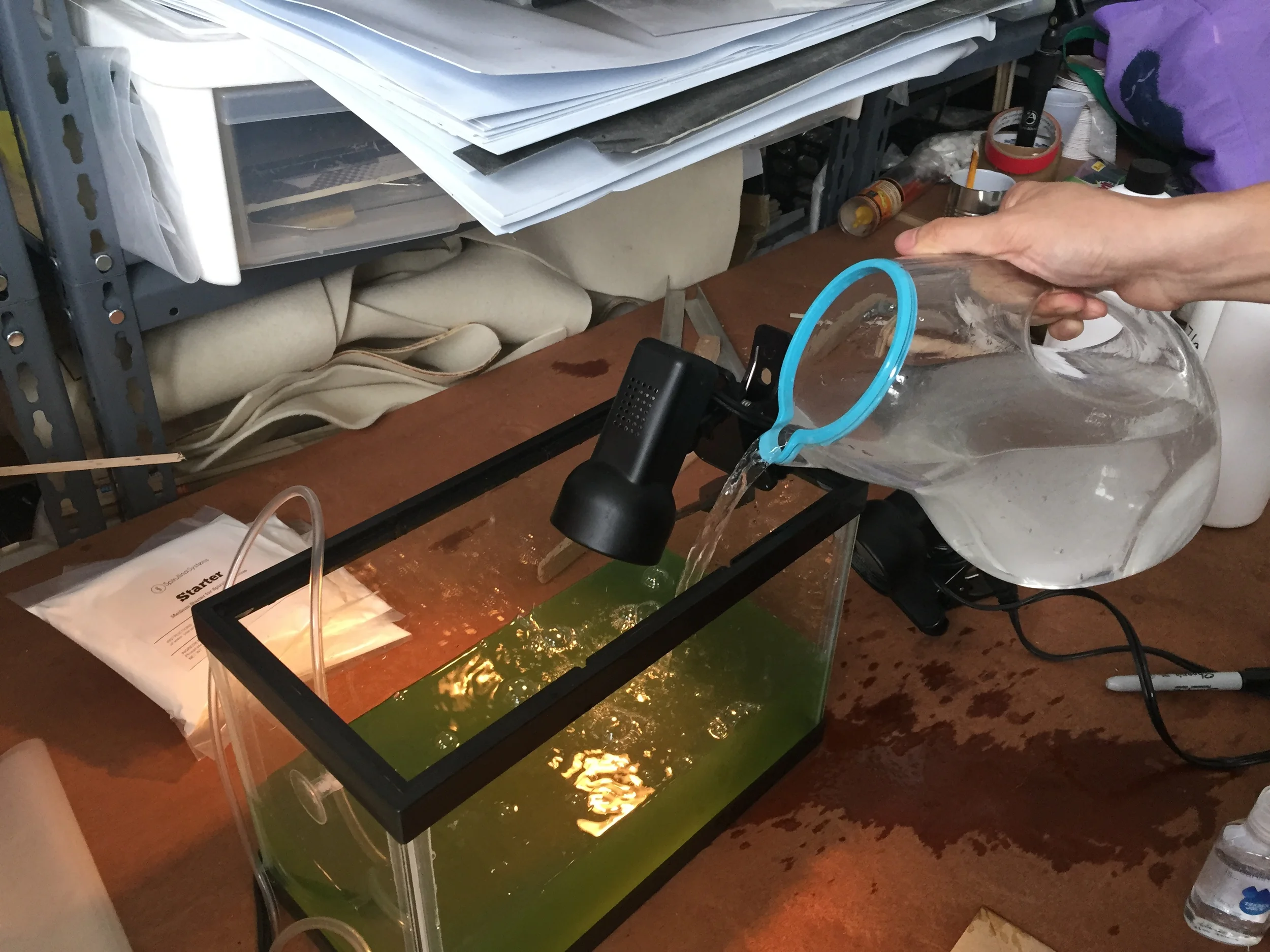
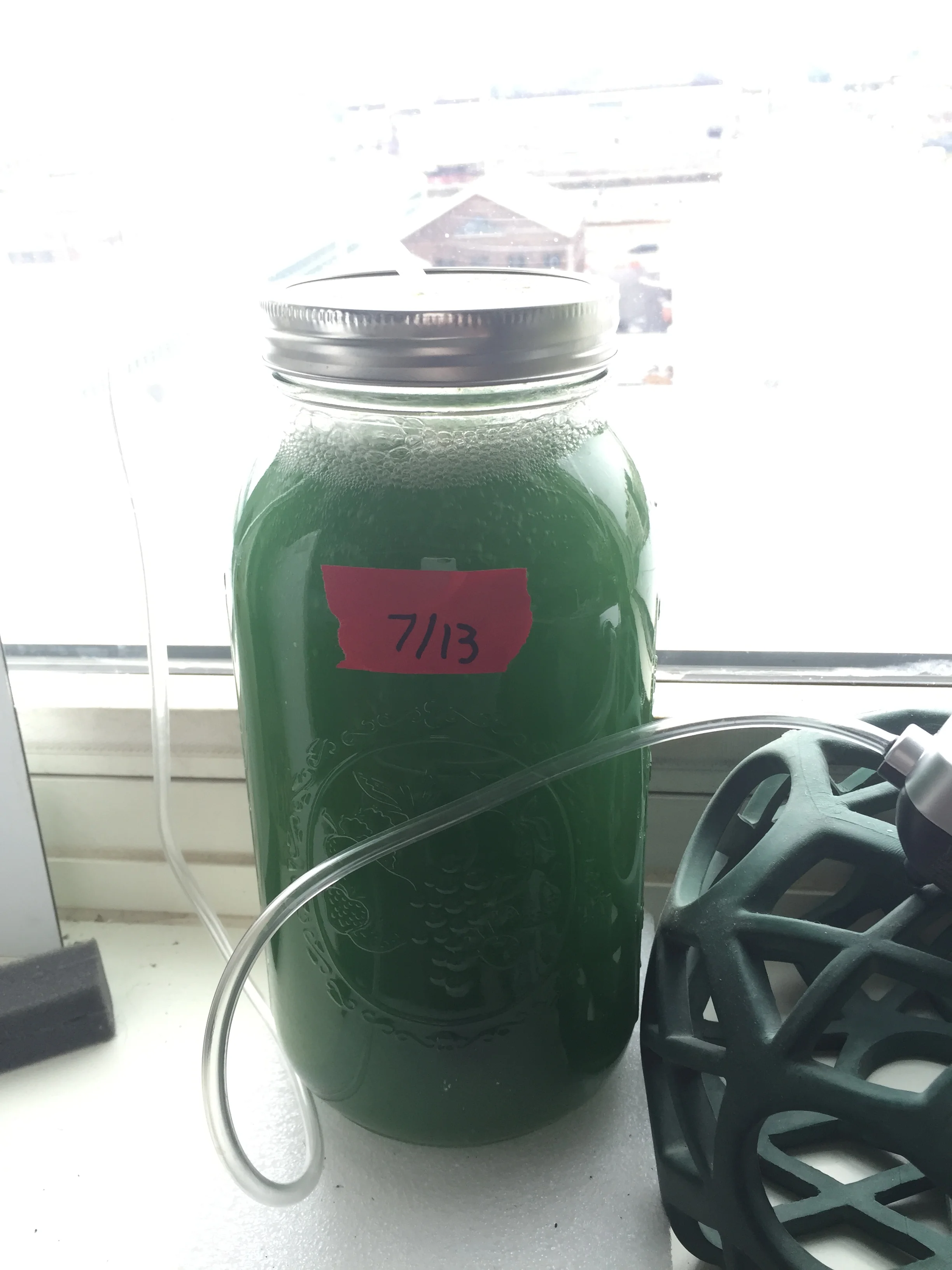
Growing Spirulina in the New Lab




Prototype II: Experiments in Kits and Systems
We are continuing to develop the system of plants into the Farm Pod and are testing various hardware systems and databases.

Image from Jimmy Tang


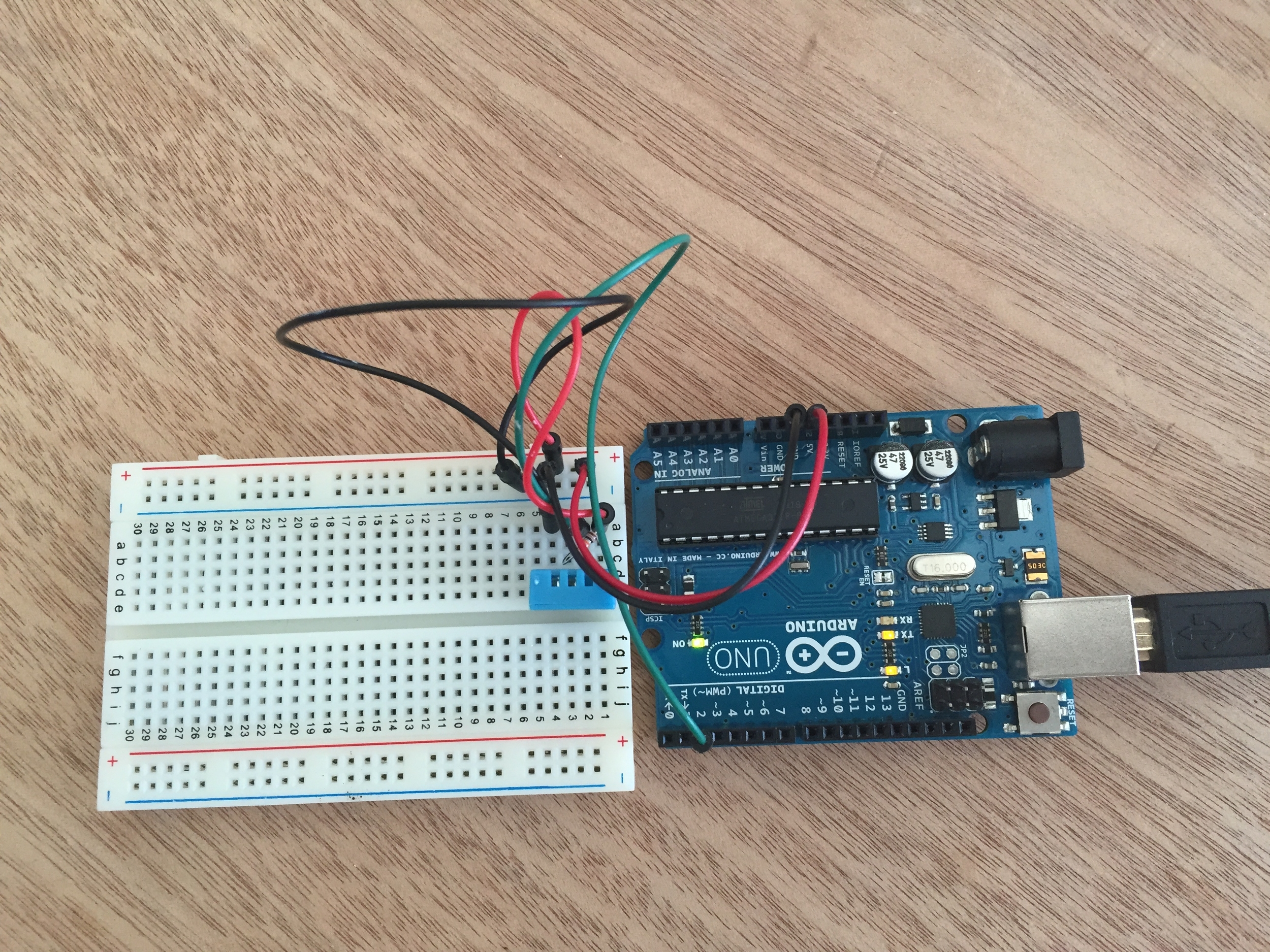
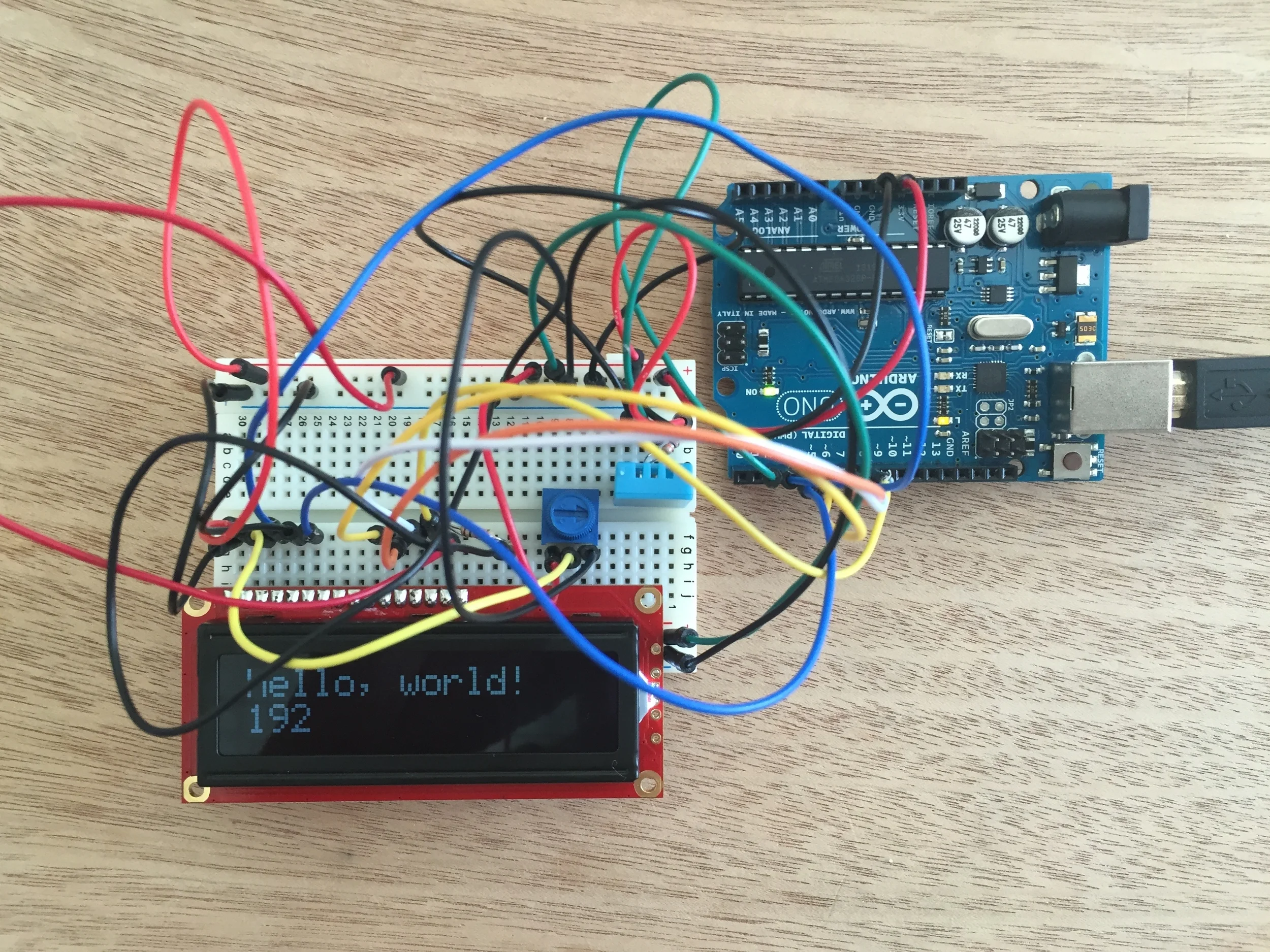
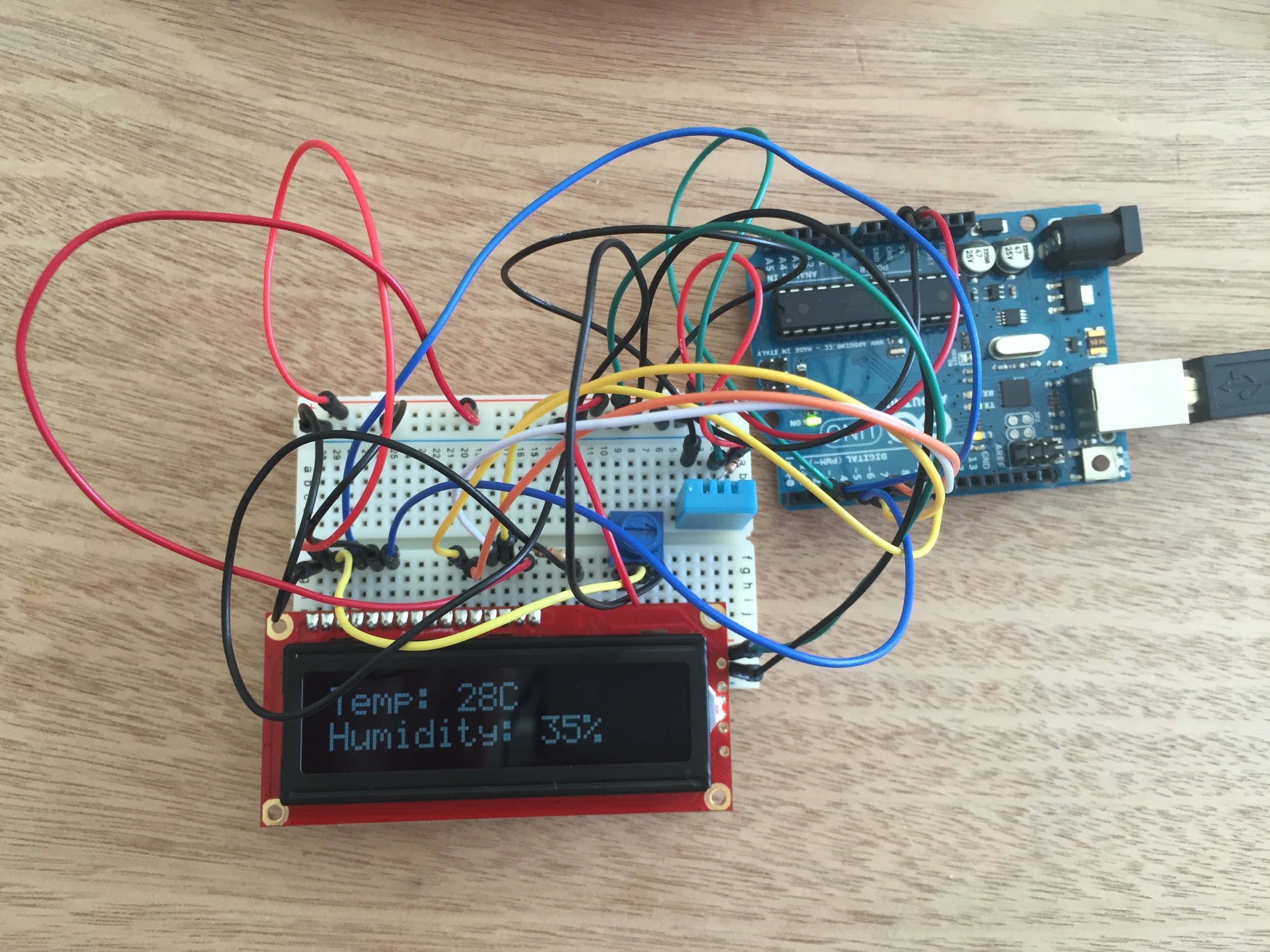
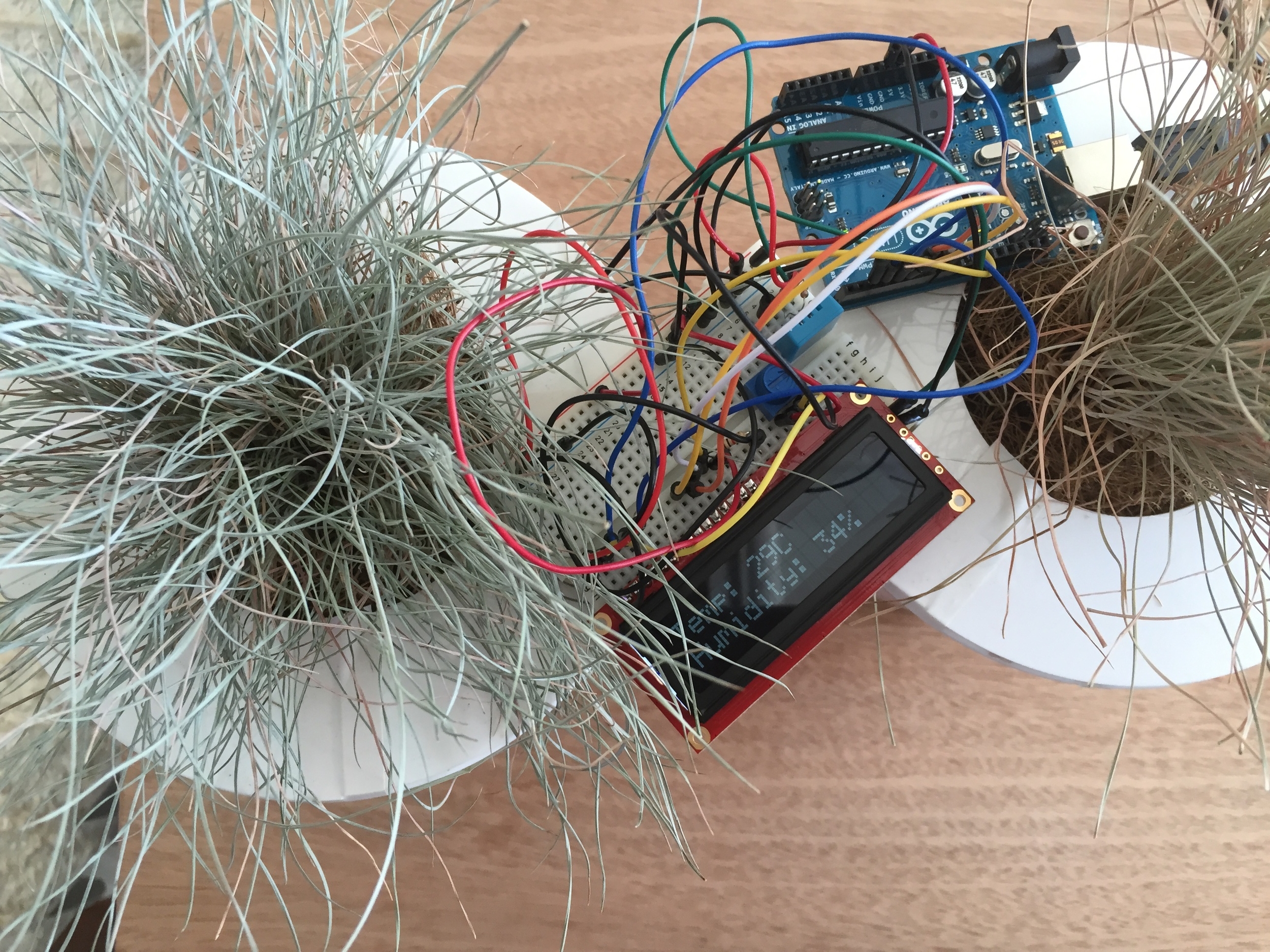
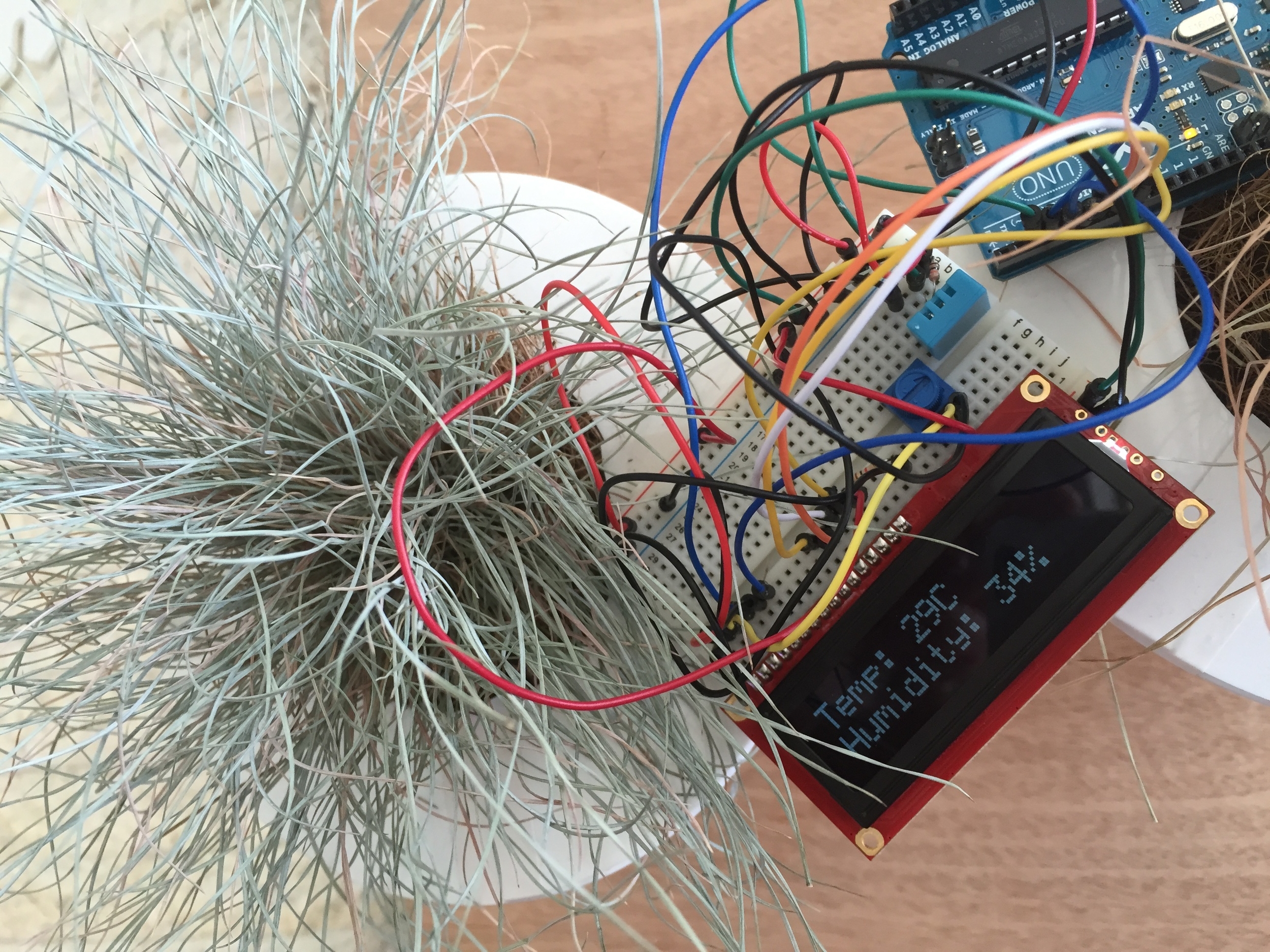
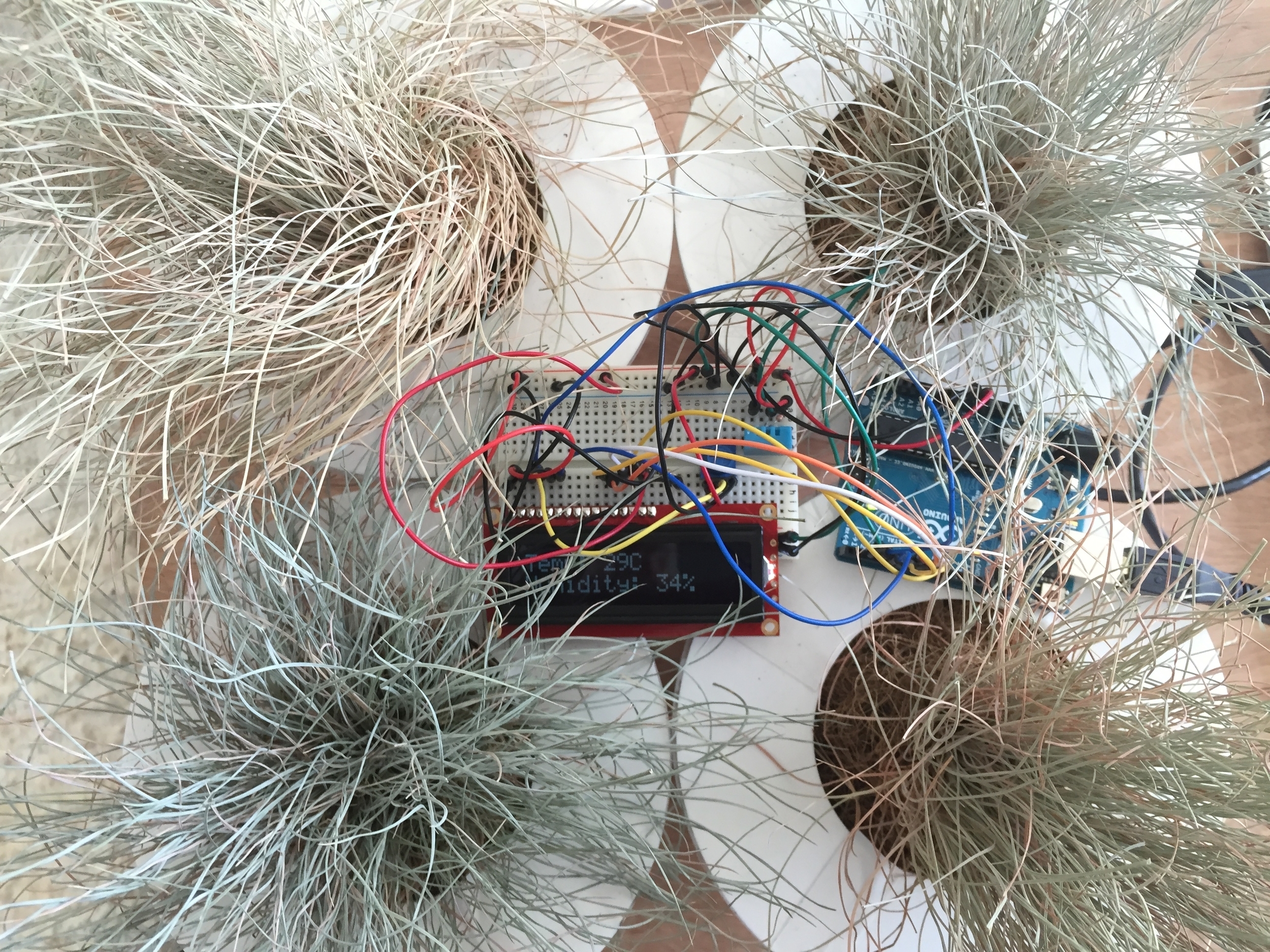
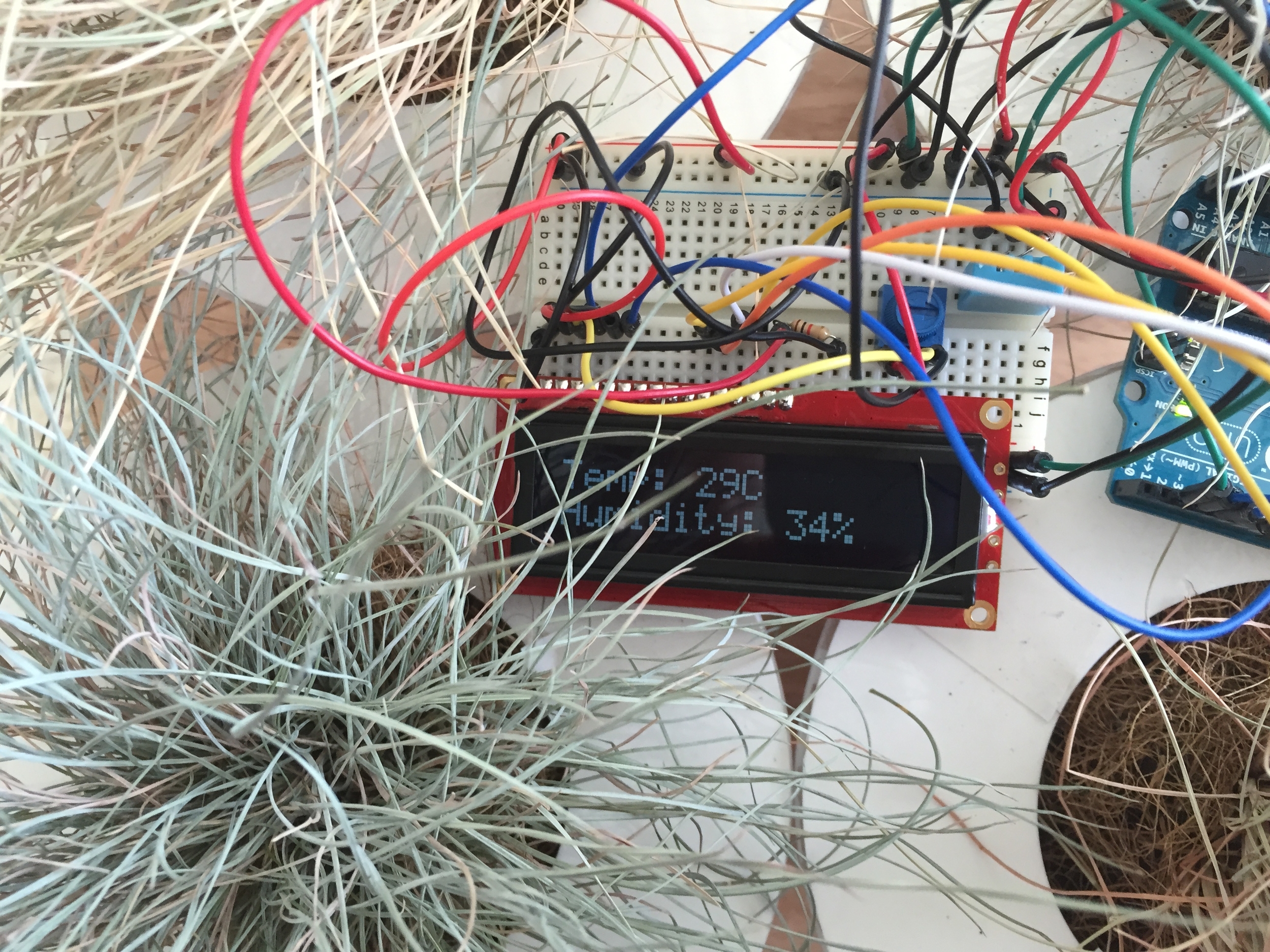
Prototype I Hardware: The Internet of Plants
Preliminary prototypes of the hardware system using an Adafruit Temp & Humidity sensor. Readings being sent to an LCD Screen. Next step will be to send data over wifi to a data base.

Prototype I Software: Modeling the Rotegrity Sphere
Initial prototypes for modeling the rotegrity sphere:
- Used a Chrome Experiment Globe to think about displaying data
- Worked in Processing using the Hemesh Library to think about modifying existing models
- Worked in OpenFrameworks to pull in a Rhino file to use the 3D model


Terreform One: Plug-In Ecology
I am currently doing a Research Fellowship at Terreform One working on their project Plug In Ecology: http://www.terreform.org/projects_habitat_Plug_In_Ecology.html
I am working with Jimmy Tang (http://siuhim.com/) to construct a networked plant system on the surface of the Urban Farm Pod. I will be concentrating on the software and collaborating with Jimmy on the hardware implementation.
Urban Farm Pod:
" The Plug-In Ecology; Urban Farm Pod is a “living” room for individuals and urban nuclear families to grow and provide for their daily vegetable needs. It is an interface with the city, potentially touching upon urban farming, air quality levels, agronomy techniques in test tubes, algal energy production, and bioluminescent light sources, to name a few possibilities. It can be outfitted with a number of optional systems to adapt to different locations, lighting conditions, and
habitation requirements. While agricultural food sources are usually invisible in cities such as New York, the pod archetype turns the food system itself into a visible artifact, a bio-informatic message system, and a functional space. The Plug-In Ecology sphere prototype uses a robotic milled rotegrity ball for the under-grid structure made of reclaimed flat packed materials. A fully operablesub irrigation system and a shaped foam panels serve as sleeves for the potting elements and agronomy tissue culture for micropropagation. A digital monitoring platform relays information about specific plant health to the web. Our vision for future iterations of the pod is to naturally grow structures over time, within a new form of mediated arboreal culture, to integrate the biological and mechanical elements
more closely, to transform the object into one that grows and changes symbiotically. The Plug-In Ecology project sets out a direction for healthy biological exchanges with urban inhabitants, and to contribution to the life of urban ecosystems that mediate between autonomy and community." -- Terreform One

Image Credit: Terreform One

Image Credit: Terreform One
Concept Development:
omputational Ideas
- computational plant modeling / simulation
- computational design for networked systems
- algorithmic to digital fabrication
- plant communication: networked and cooperative systems / signal exchange
Urban farming ideas
- hydroponic farm
- networked sprinkler system
- solar monitoring
- sensors: humidity, light, air quality, temperature,
environmental ideas
- soil remediation
- bio remediation
- rhizo remediation
System overview:

UI PROTOTYPE I:

Precedents:



Met Media Lab Expo

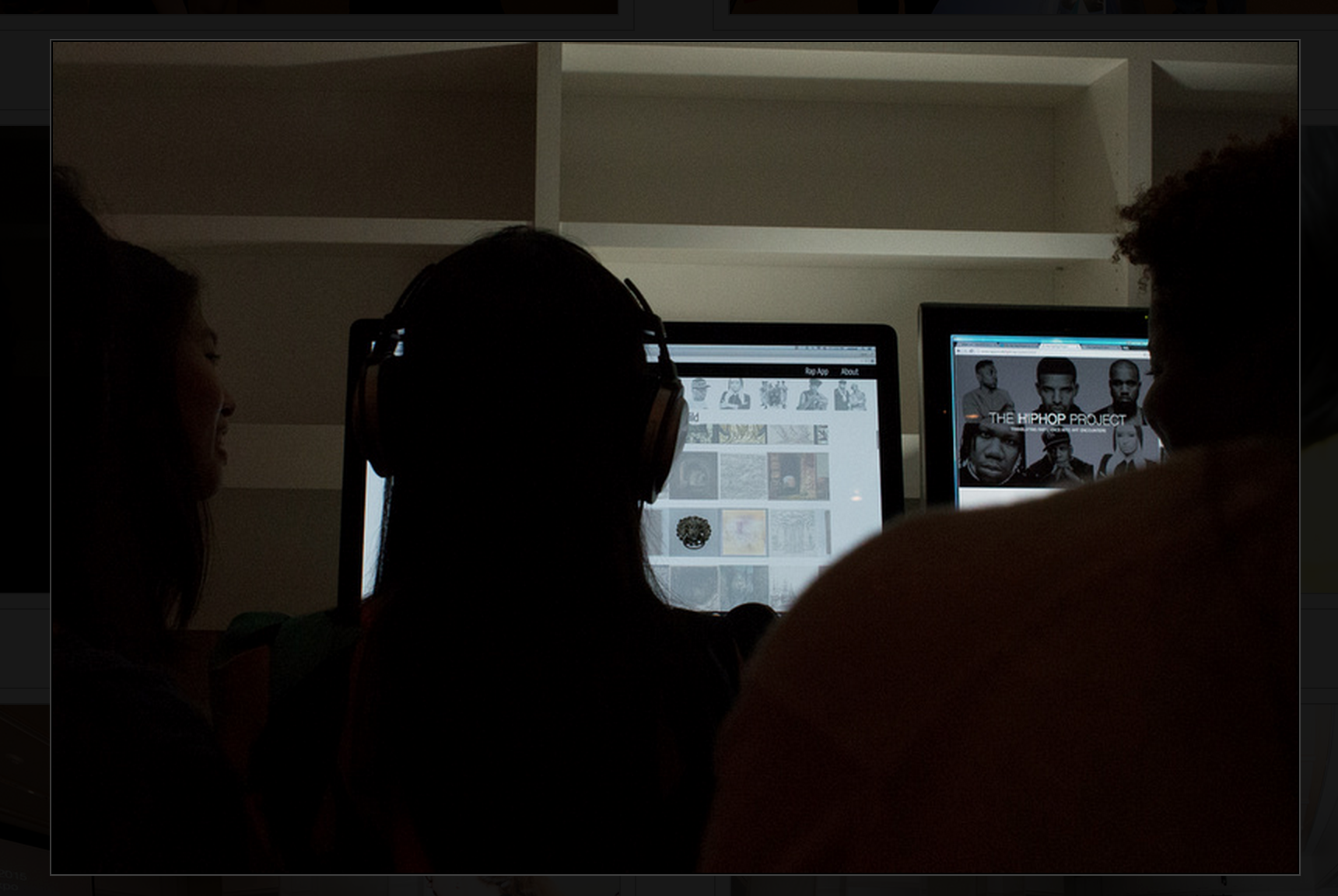
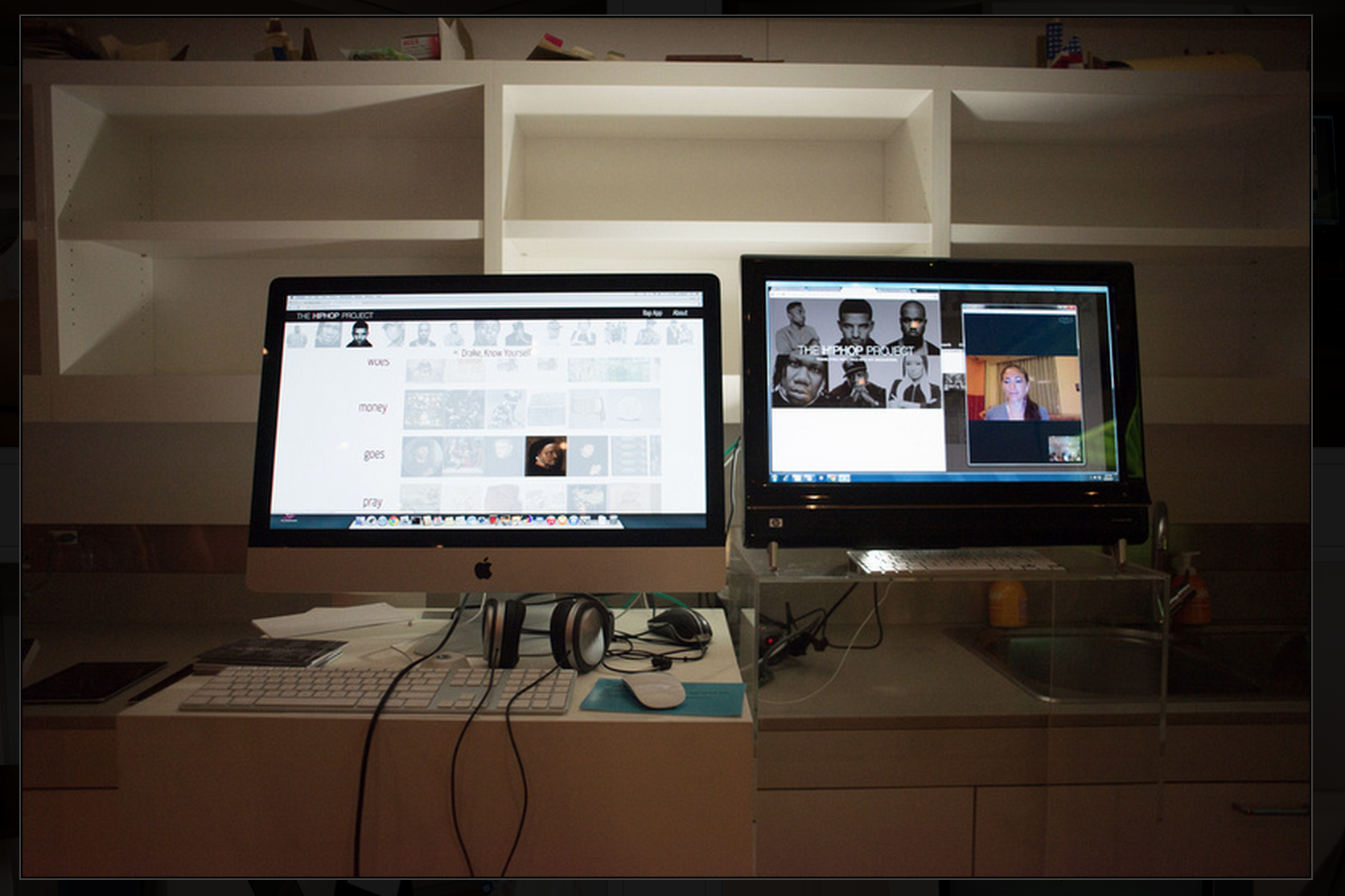
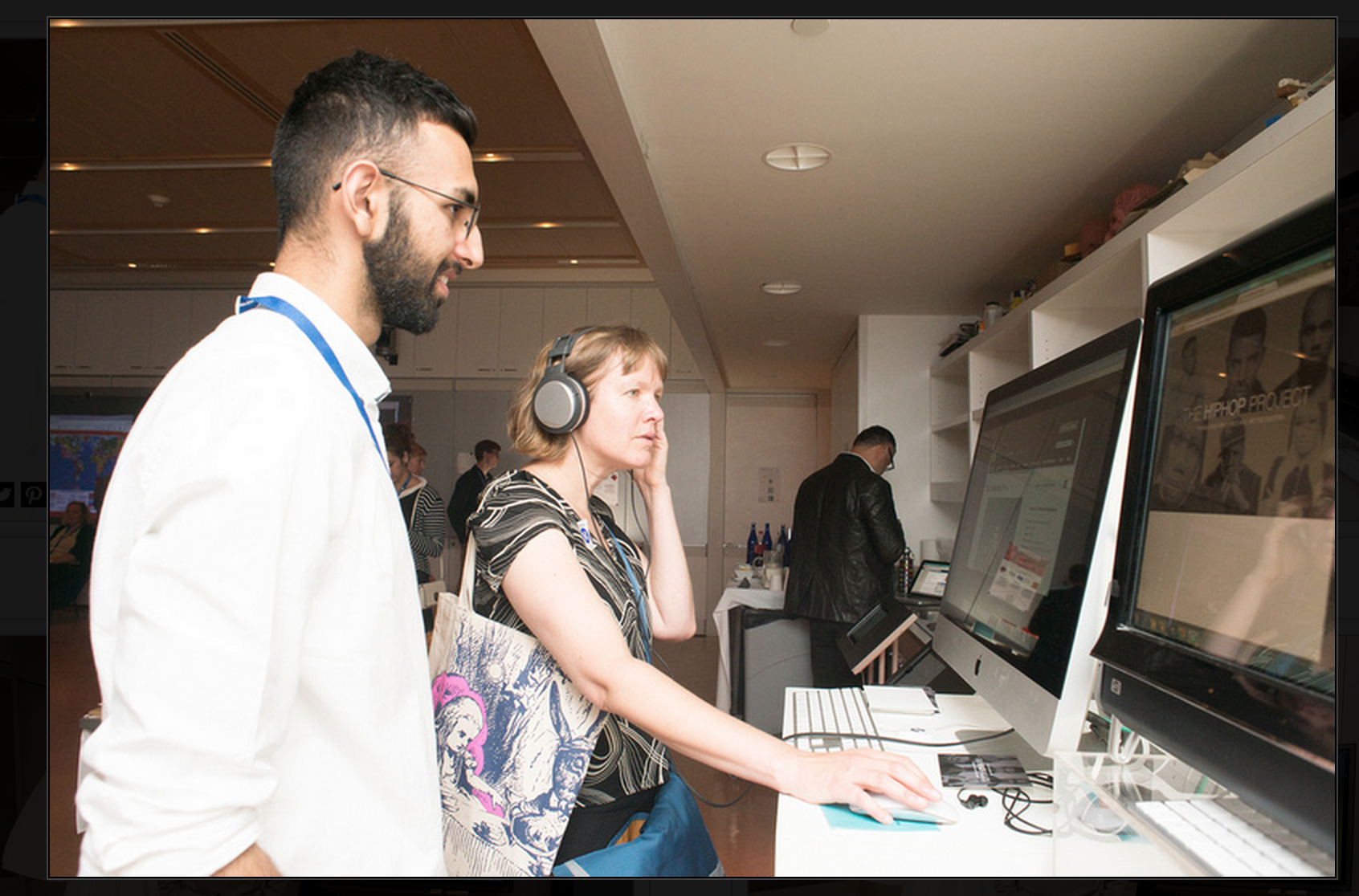
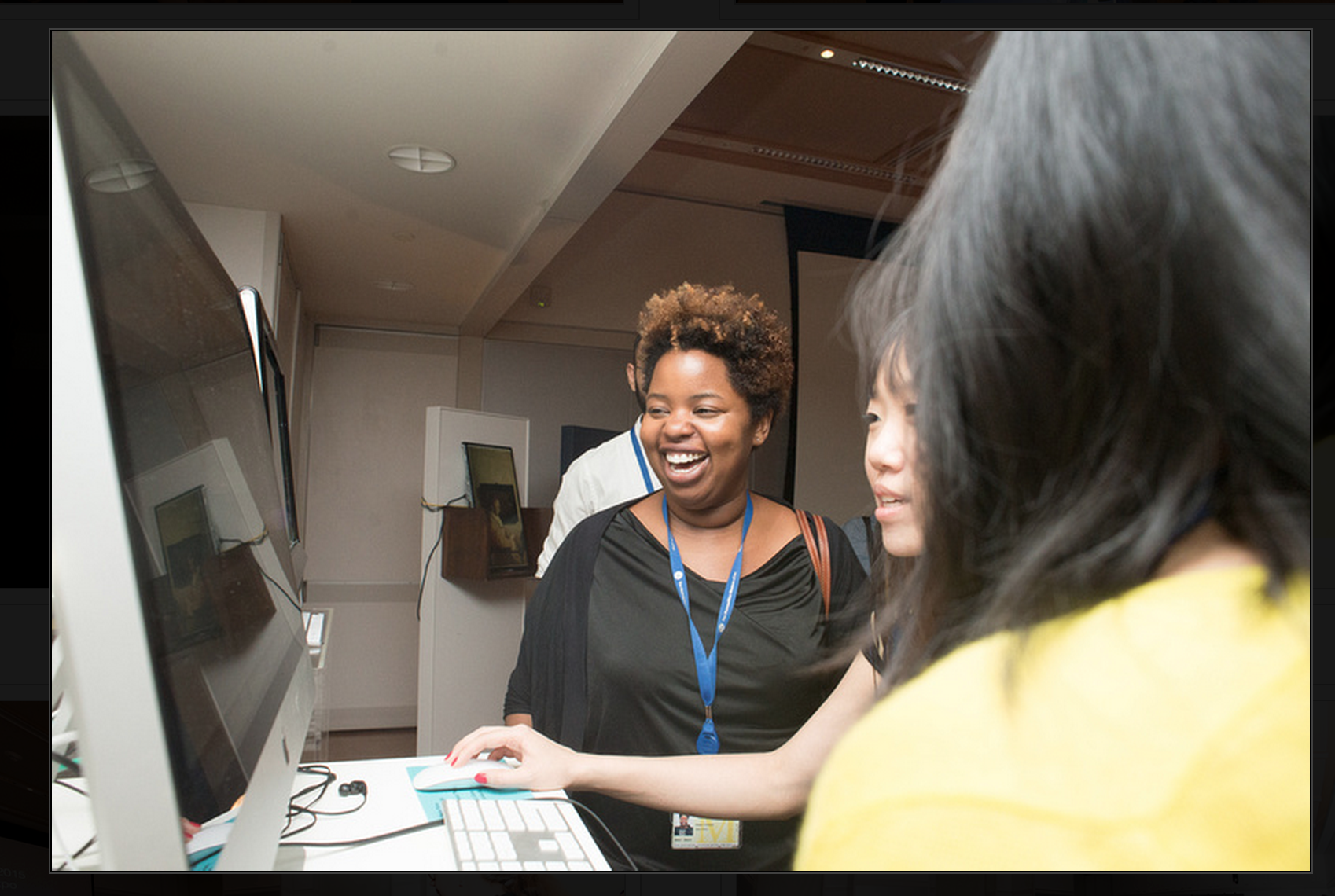
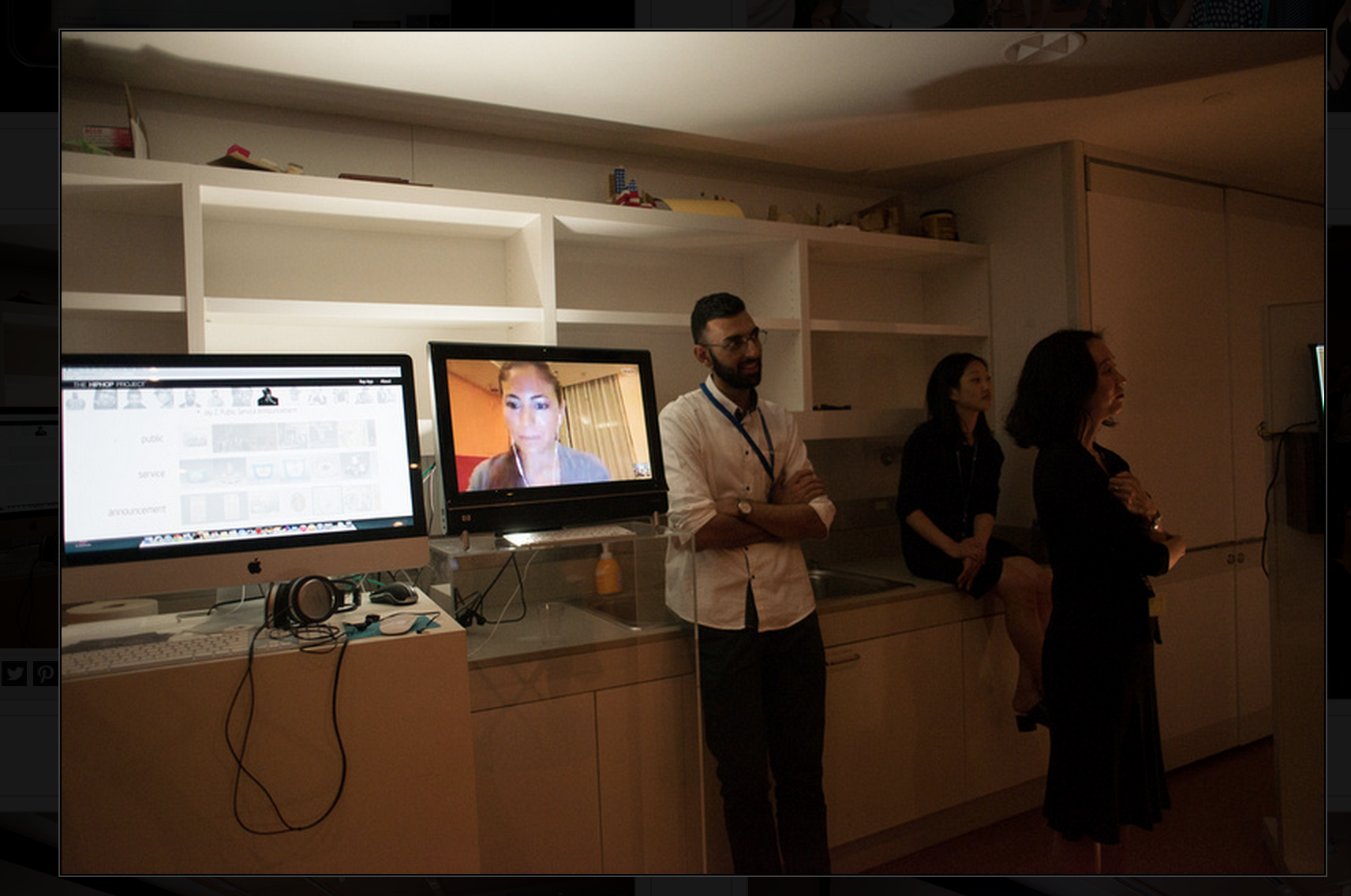
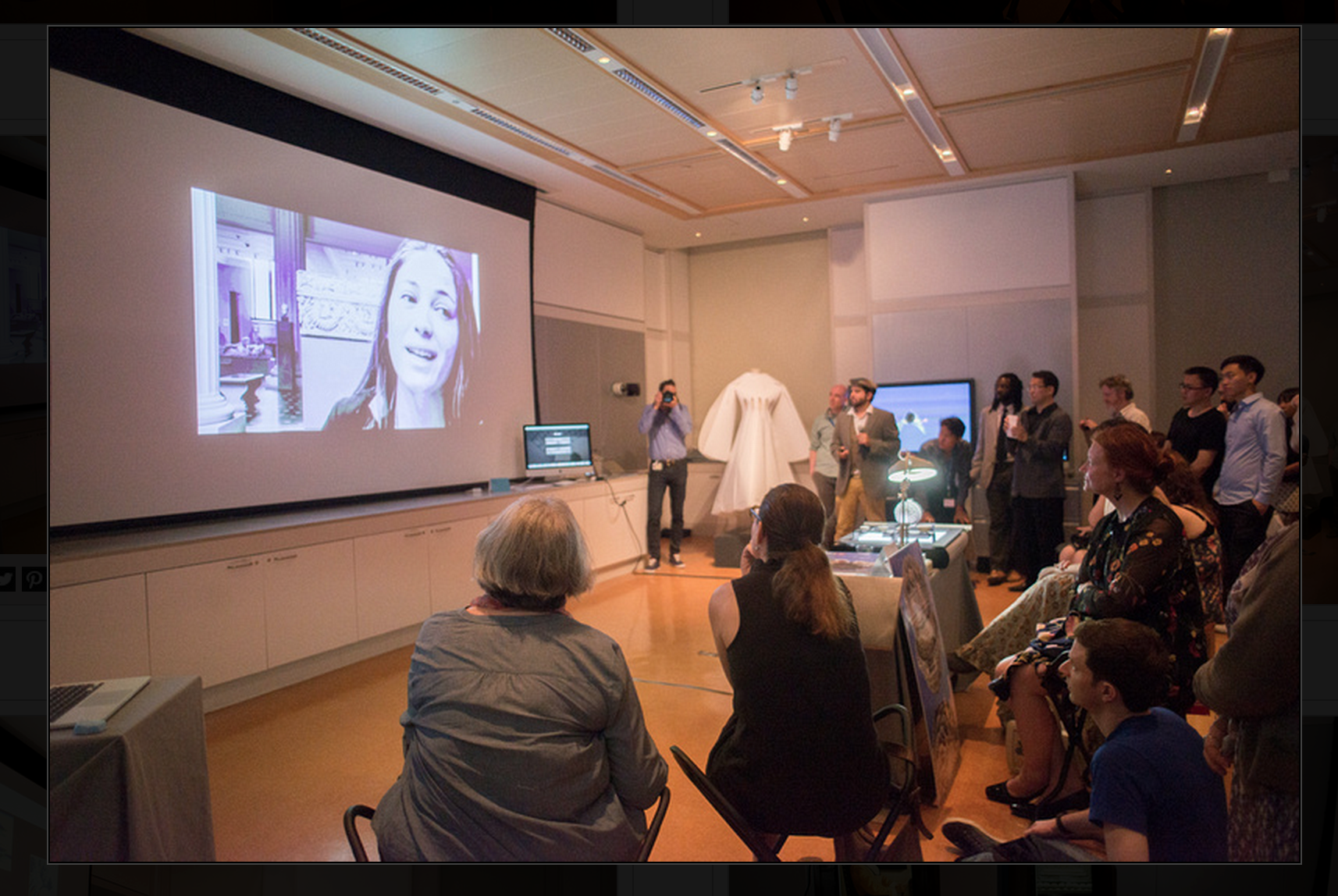
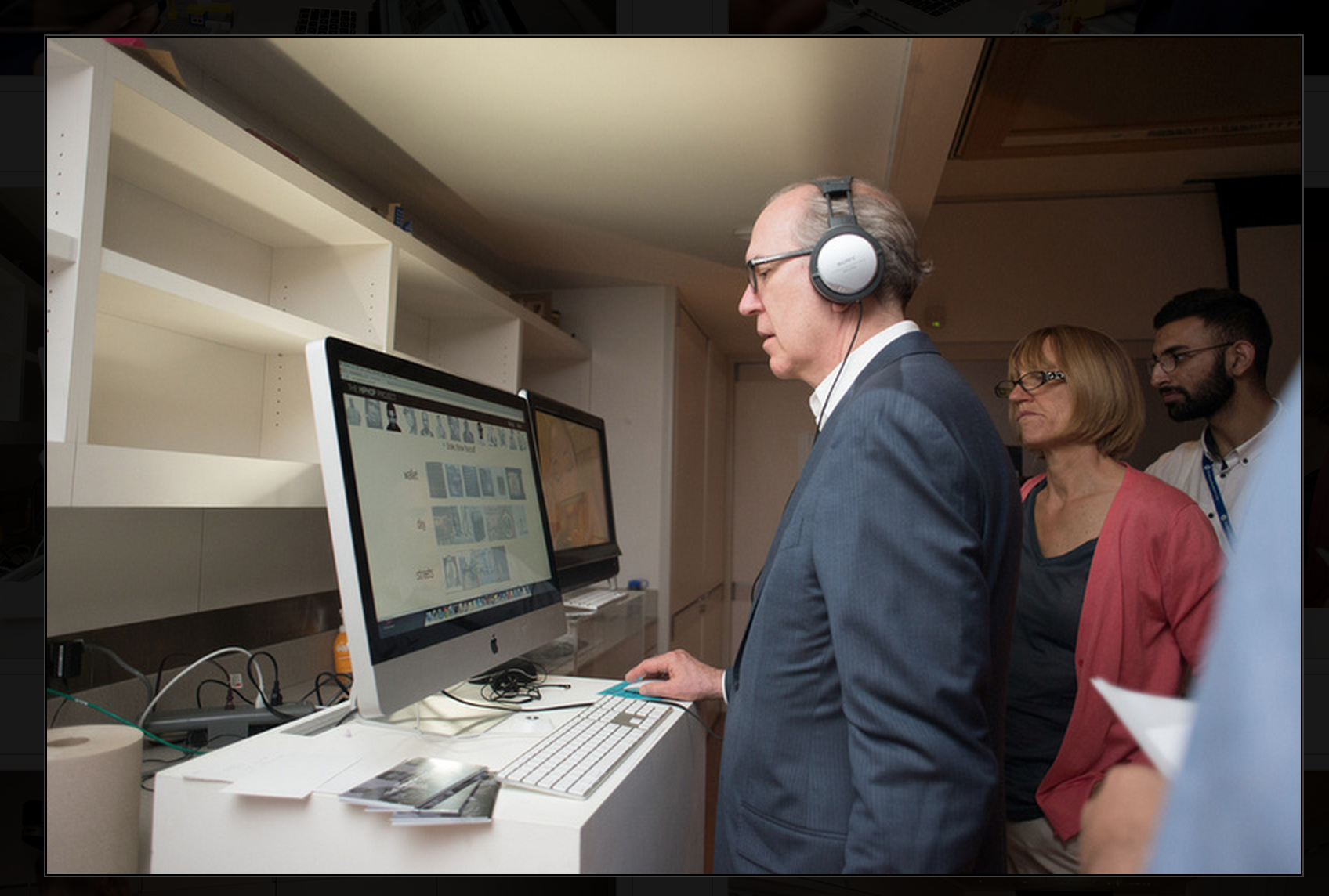
The Met hosted the bi-annual Media Lab Expo. My project The Hip Hop Project was part of the exposition. I was live-streaming from China and speaking with attendees through Skype!
META Methods: Final Piece
Final paper here.
My final piece, the capstone of the <META>Methods research project, is entitled Why Do I Hate Myself?. It is an interactive, mixed-media piece combining performance, video installation and algorithmic art. It uses the data and algorithms from the prior two pieces but, by combining data with performance, adds a level of artistic interpretation. This piece is intended to inspire an emotional experience for users because the video is an abstract account of my personal journey with body dysmorphia. The data visualization accompanying the piece was created using a unique set of search words that deal with concepts related to the female form.


OpenFrameworks: On The Line
OpenFrameworks: On The Line
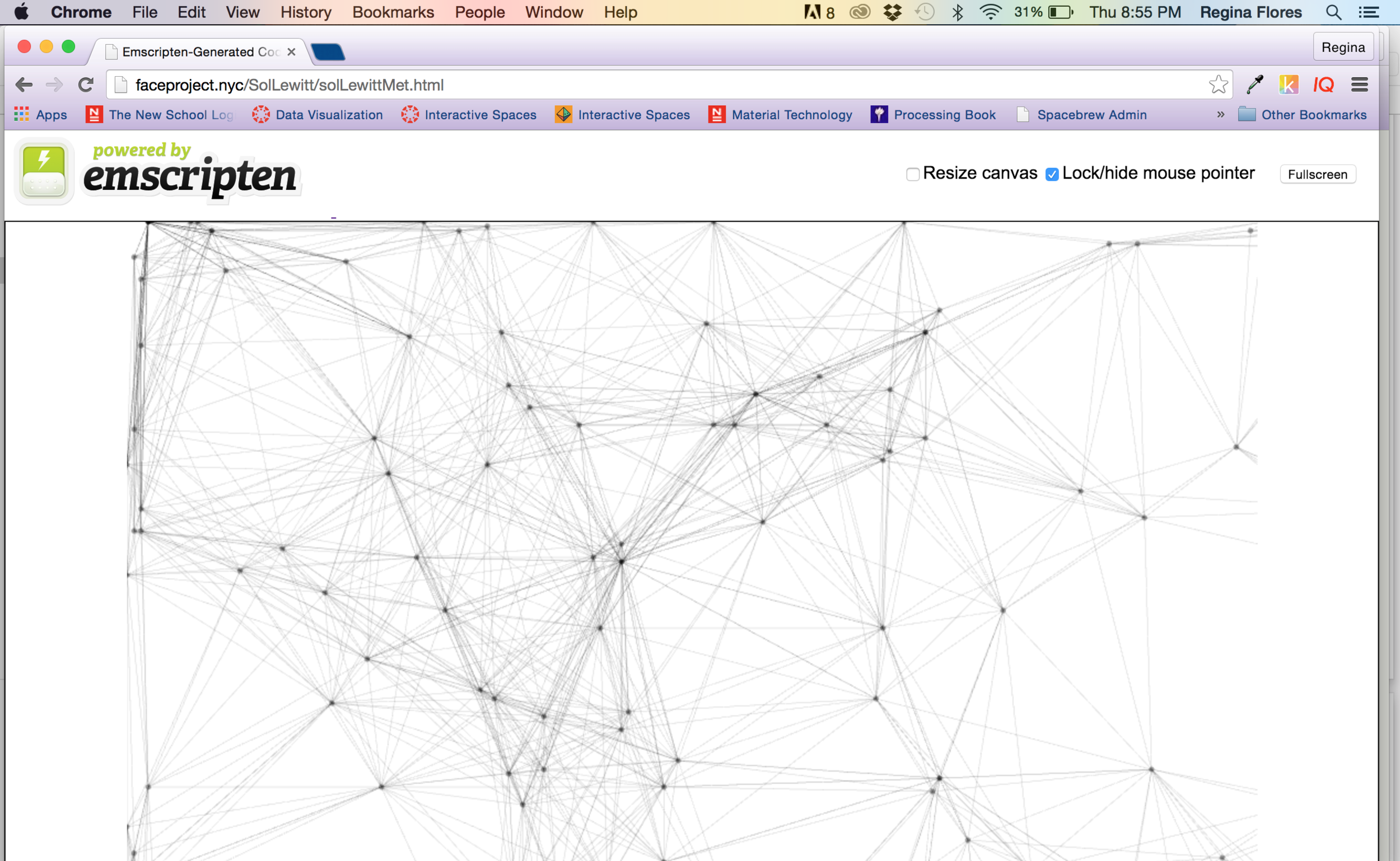
http://faceproject.nyc/SolLewitt2/solLewitt2.html
Welcome to processing.js for Open Frameworks! Have you ever made a project in openFrameworks and been like "This is awesome! I want to put it on my online portfolio!". You could always make a video or take photos, but what about the UI aspect of your project? How can people see the awesome mouse effects you made? Enter Emscripten. Emscripten turns your C++ code into Javascript code in a matter of minutes! So you can put your awesome OF project "on the line" in your portfolio. My project 'OpenFrameworks: On The Line' is a proof-of-concept of making the Emscripten library work.
The Emscripten project spear-headed by Arturo Castro (a core OF developer) is really not being used widely in the community. By submitting this project as part of the OFOpen, my hope is that more people will start using it. By popularizing the functionality it could be a more core functionality of OF. Further research needs to be done to see the capacity of Emscripten, like which add-ons work and do not. Also, rendering speed is an apparent issue which should be addressed.
I think one core question is: Can OF on the web push our creative pursuits? Or is this just simply for documentation? I would like to hope that by adding functionality to our tool box we can push the limitations of our artistic expression and find new avenues in which to operate. I think more work here can help shape a new era of OF creativity.
The piece that I have submitted as my proof of concept is called "Sol Lewitt Met" which is an interpretation of Sol Lewitt's Wall Drawing #118. The points are generated by performing a Self Organizing Map algorithm on data from the Metropolitan Museum of Art. Each point represents a work of art that is organized by the RGB color channel. The points are then connected by lines to create a data-driven-wall-drawing.
Emscripten Examples:
http://kripken.github.io/emscripten-site/
http://arturocastro.net/files/of-emscripten/
http://arturocastro.net/files/of-emscripten/imageLoaderExample/
http://kripken.github.io/emscripten-site/docs/getting_started/Tutorial.html#tutorial
Install Emscripten:
Procedures to run it:
- Download the nightly build of OF: http://openframeworks.cc/download/
- Open the Project Generator in the nightly build version of OF
- Make a new project (lets call this solLewittMet)
- Copy the source code of your running project into you "nightly build" version
- Go into Terminal and 'cd' into the solLewittMet project in the "nightly build
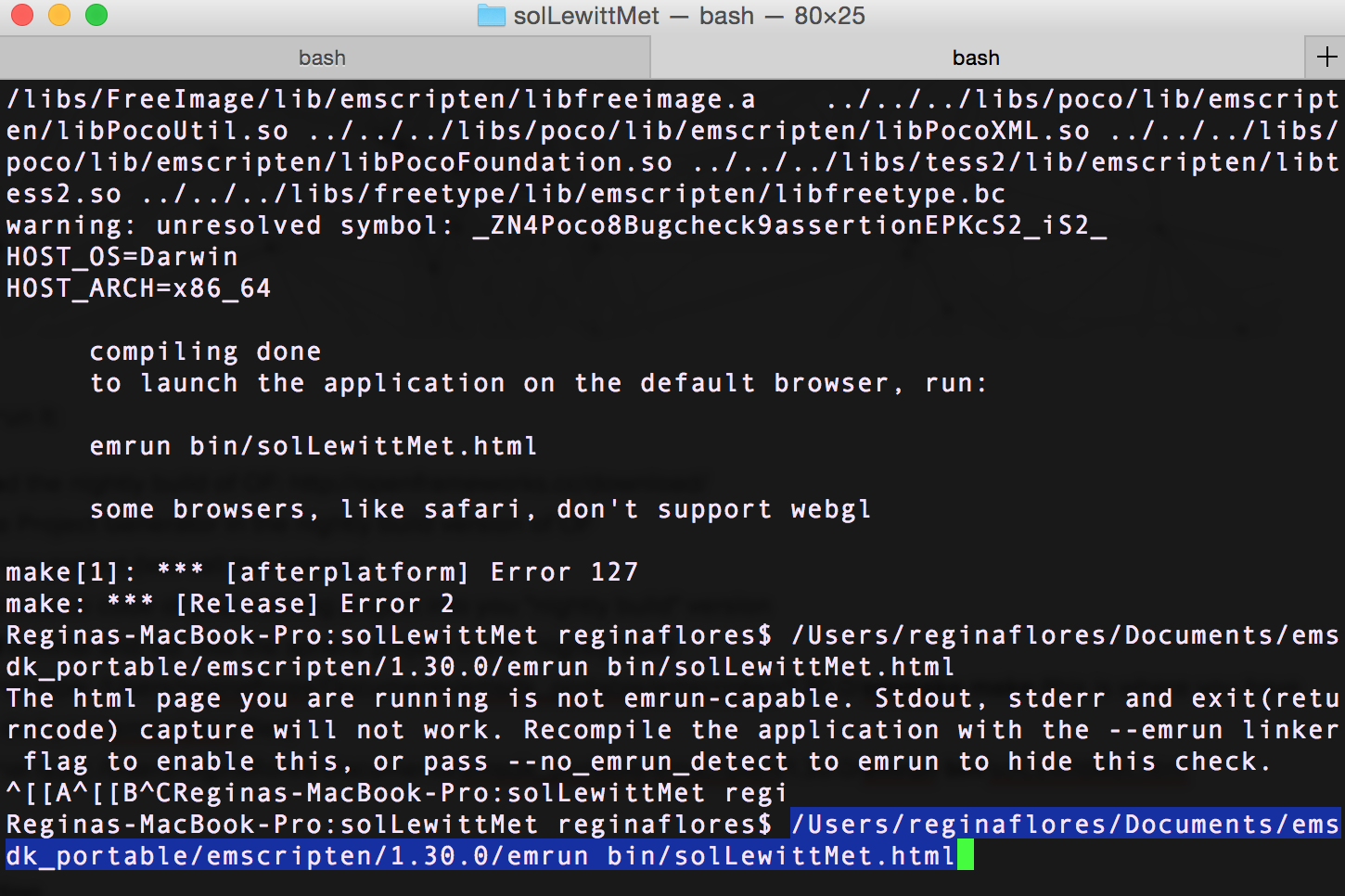
- In Terminal type: /Users/reginaflores/Documents/emsdk_portable/emscripten/1.30.0/emmake make (this is where you have downloaded your emscripten files)
- In Terminal type: /Users/reginaflores/Documents/emsdk_portable/emscripten/1.30.0/emrun bin/solLewittMet.html
After you run the emmake command you see that the Terminal gives you the .html file to run in the emrun command. Notice how the bin is now full of web files.

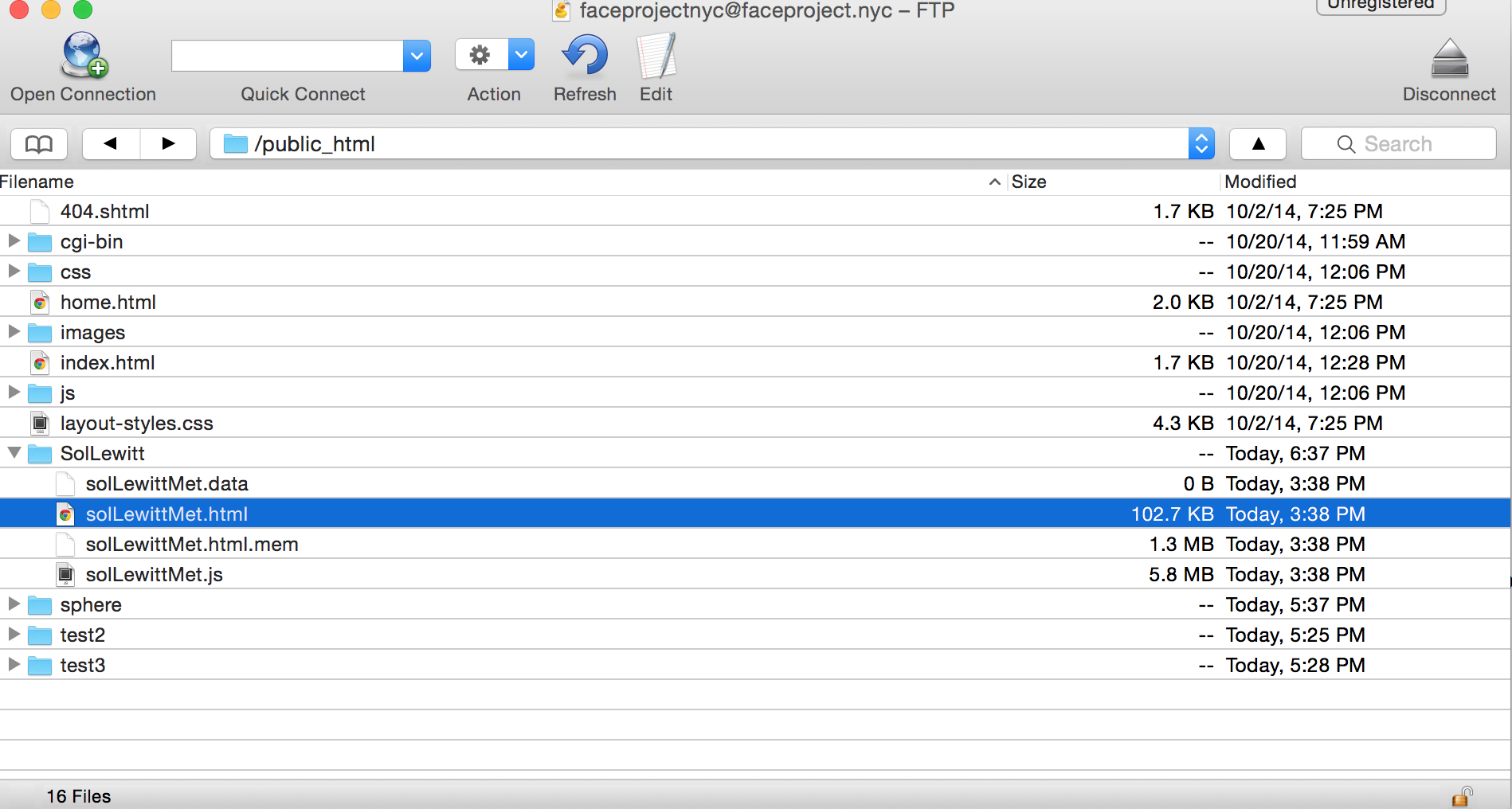
In the /public_html files on your website put all the bin files:
Plastic Alternatives: Exploring Mycelium as a Medium
Link to my final Paper.
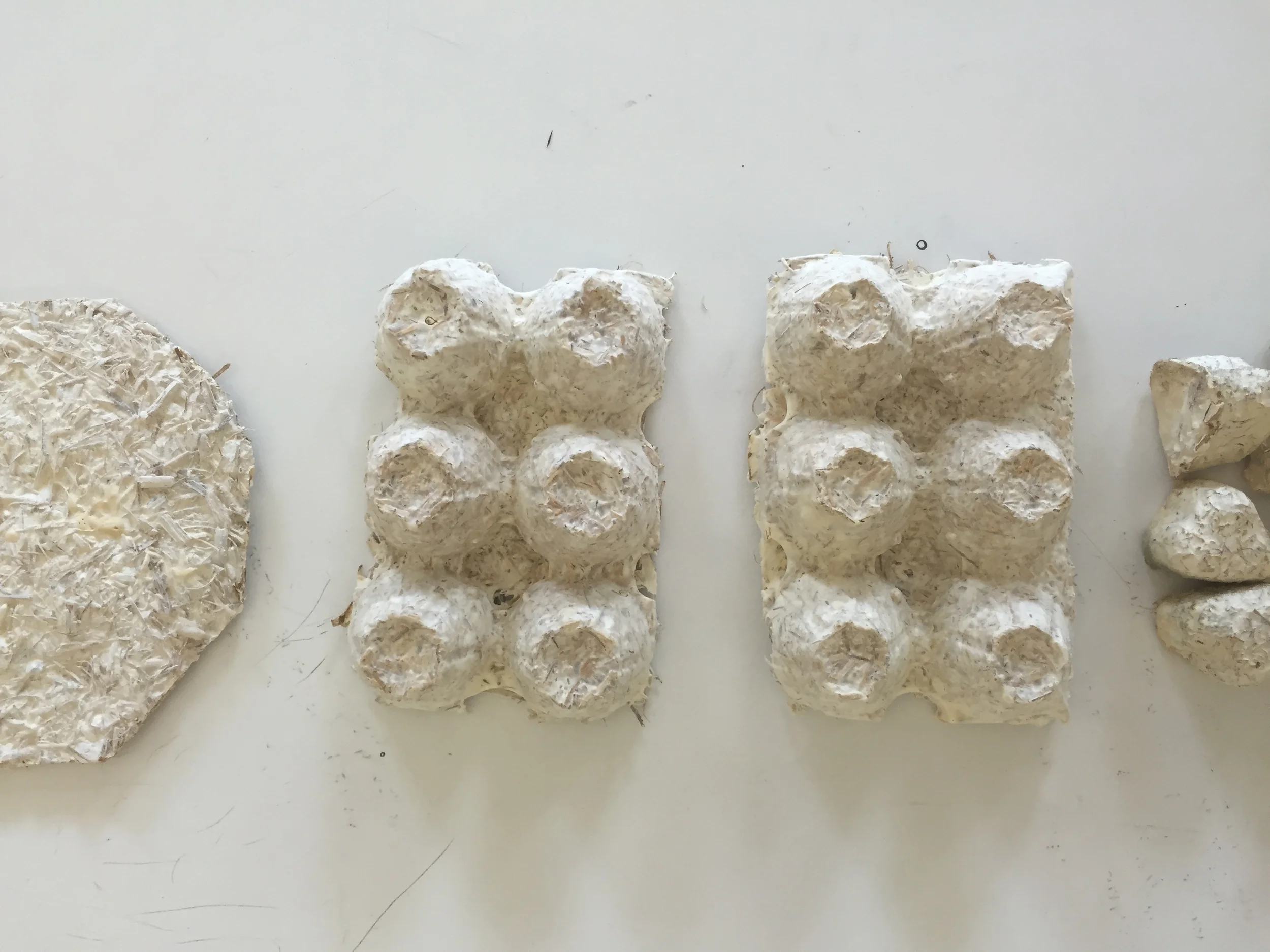
This research deals with using mycelium as a medium for (1) degrading plastic and (2) growing alternative and sustainable materials—both of which address the rise in global plastic consumption and pollution. A series of prototypes were made using Ecovative’s Reactivating Dry Material to demonstrate the potential uses for these mycelium- grown products and to show how easily we can substitute such materials for those that are traditionally made from polyurethane and other harmful, toxic plastics. In addition, preliminary experiments were conducted to understand the potential for bioremediation using the fungus organism schizophyllum commune. Using both yeast malt and potato dextrose agar mediums, ten plastic samples were examined for 15 days. The yeast malt agar mediums yielded the best results. In less than a week the fungus samples on yeast malt plates grew to approximately twice the size of those on the potato dextrose plates. The 10 samples continue to be under observation and will be observed until degradation is complete and the plastic is gone. As of this writing, the coffee cup lid sample appears to already be undergoing degradation. Further research on timing using a broader selection of polyurethane samples will be completed over the next 12 months as part of the New Challenge Sustainable Design Award.




The HipHop Project: Translating Rap Lyrics into Art Encounters
Link to the website: http://www.rappersdelight.nyc/splash.html
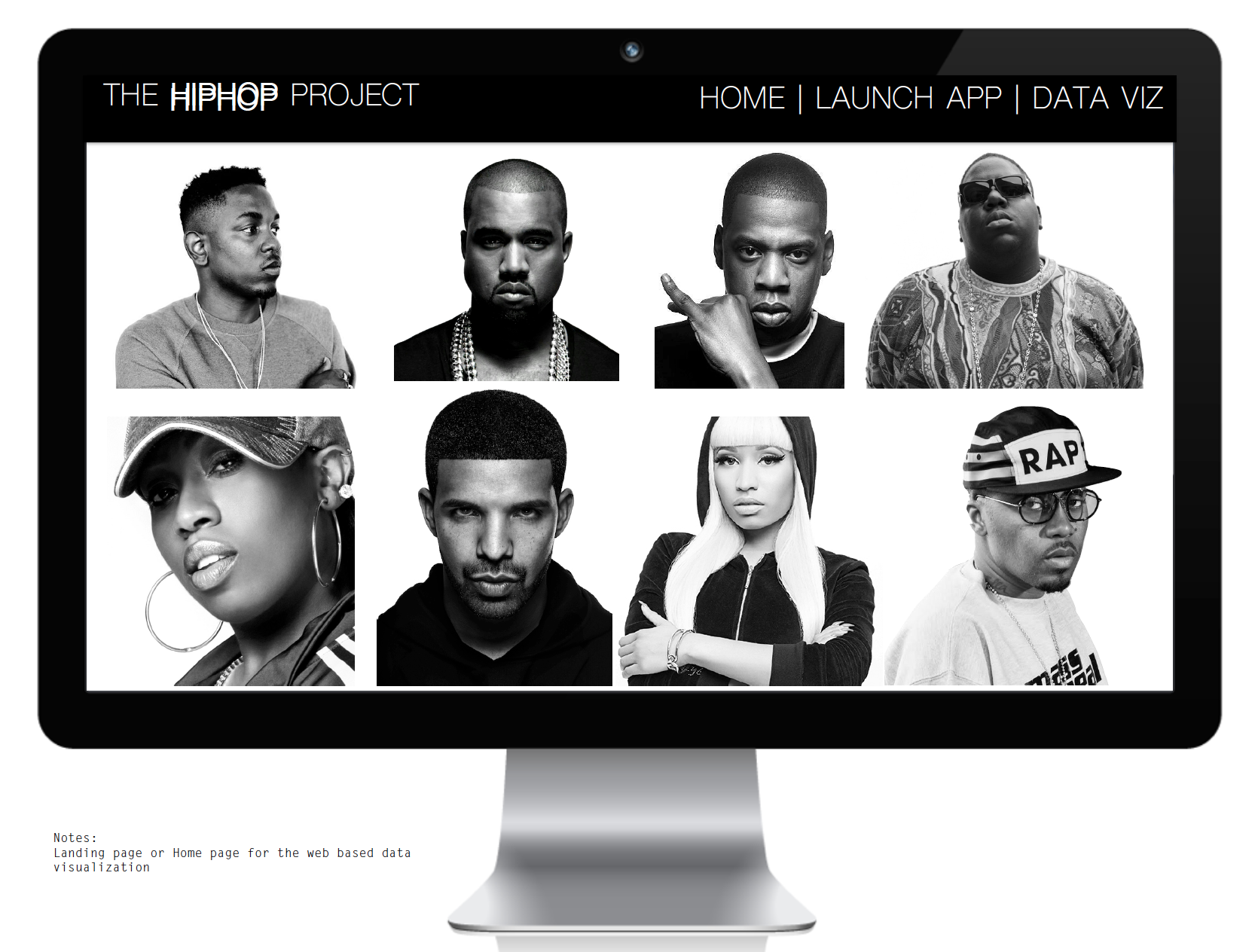
The HipHop Project is the culmination of a month long research project in data visualization. It explores a variety of academic concepts including the museum as medium and contemporary black culture as a "fluid amalgamation of reciprocal influences: fine art overlaps with music, music overlaps with literature, literature overlaps with dance and beyond."
Rapper's Delight is a project undertaken as part of work for the Media Lab at the Metropolitan Museum of Art. Using the words from rap lyrics as key-word searches through the Met's digital archive of over 200,000 works of art, users can experience a curated "tour" of the work at the Met.
This project could engage any visitor who love rap music and provide them with a unique lens through which to view the museum's collection. It could allow visitors, who are already familiar with the Met, to see work that they may not have otherwise known existed. However, the key audience for this project are the young men and women who live just a few miles away who may have never had the opportunity to come to the Met. Rapper's Delight, is a way to offer the Met through the lens of the poetic and culturally relevant music that is Hip Hop and to engage in contemporary black culture.
The website URL RappersDelight.nyc is playing homage to the song Rapper's Delight by The Sugarhill Gang, largely considered to be the song that popularized Hip Hop music.
An ethnographic research study was conducted to determine the 13 rappers used in the project. Participants were asked two questions: (1) who their favorite rappers are and (2) who the most influential rappers of all time have been. The participants in the study are a group of cultural influencers including a Grammy Award Winning R&B singer, a comedy writer (and D.J.) who is known for writing on Late Night with Jimmy Fallon and HBO, and a crew from The Baisley Housing Project in South-Side Jamaica, Queens who are community leaders and activists.
This was accomplished using Javascript and was created using the Rap Genius API developed by Eddie Forson, the website Rap Genius, and the Met's API developed by the Met's Digital Media department.
API Links:

Tesla Concept
Here is the link to our concept presentation.

Major Major Show
A snippet of the piece I showed at the Major Major show (http://majormajor.parsons.edu/)
The Future of Retail: Tesla
Link to the presentation here.

META Methods Prototype 3


Rapper's Delight: Hip Hop Curates The Met
Using words, phrases and meanings from rap music (rap genius api), I will create curated visualizations of the work on display at the Metropolitan Museum of Art (Met api). This is a way to engage visitors who love rap music and help frame their experience through a unique lens.

META Methods Prototype 2.0
META Methods Prototype 1.0

'<'META'>' Methods
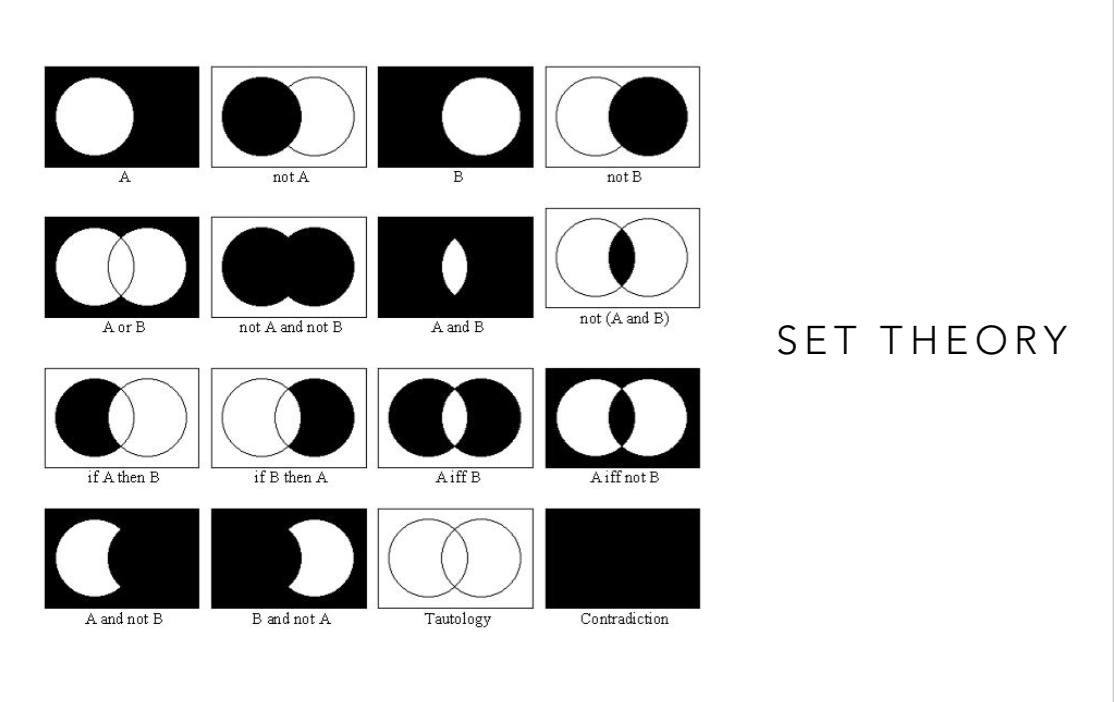
Set Theory is a branch of mathematics that studies sets or the collection of objects. In relation to Big Data, the cataloging and the creating of collections of information is where this project begins. Viewing the world as a massive network, everything can be viewed a data point, but also, when collected, becomes part of a set. And what defines any data point is the metadata that defines it and links it to that set of data.
'<'META'>' Methods attempts to extract beauty and information from the superset of information. This projects looks not at the individual (micro) but at the whole (macro) and attempts to find relationships, whether contextual, graphical or mathematical, by examining metadata.
This project also reimagines digital curation and asks the question: can a collection of digital assets become an asset, or work of art, in and of itself? Is metadata the “paint” that we can mix together, through algorithmic search, to create new “colors” in our digital “canvas”?
By applying mathematical theory to the analysis of a digital collection (set) of objects what new relationships can be uncovered and what new art can evolve?

OpenFrameworks Add-on: ofxMetAPI
I completed my first openFrameworks add-on. The ofxMetAPI uses the Metropolitan Museum of Art's API to the artists and hackers of the oF community.

